What is Henna?
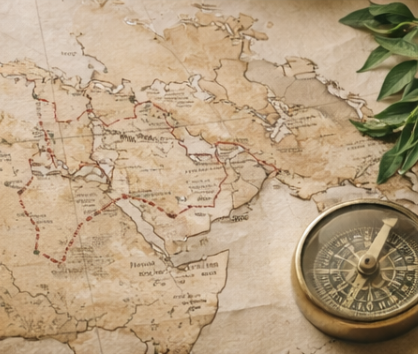
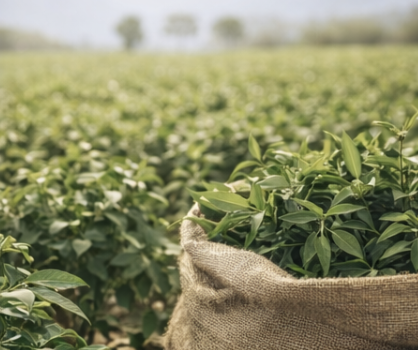
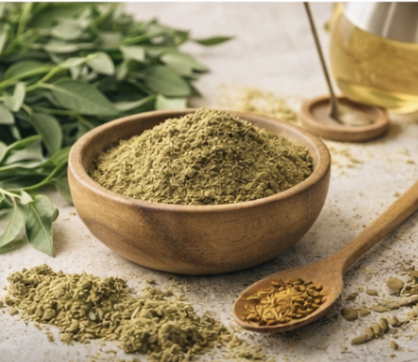
Henna or what is commonly known as Mehndi, has been deeply cultivated in the Persian Gulf, North Africa and Asian region for centuries. Henna powder is derived from the leaves of a flowering plant known as Lawsonia Inermis. The leaves are harvested, dried and grounded finely into a powder to eventually form a paste mixture, which leaves a natural stain on the surface where it is applied. The henna plant grows in dry, humid and hot climates. The longer the application is, the darker the stain becomes. This happens when the Lawson molecules from the henna leaf migrate towards the keratin on the skin or hair.
Origin:
Although dating back to 9,000 years, there has been archaeological evidence from the history of Egypt where henna was used to treat skin ailments and to color grey hair almost 5,000 years ago. Because the henna plant is known to give cooling sensation, people of the desert in North Africa and Middle East used to apply it for on their palms and feet during hot seasons.
The plant was crushed into powder form and applied on hands and feet. As long as the paste remained, the longer the cooling was felt. As the paste dried and flaked off, it left patterns on skin surface, which led to the idea of making intricate designs with this powder. Ever since then, henna has evolved as a popular accessory for people to decorate their bodies. There is also evidence of the brides staining their hands, feet and hair with henna for weddings in the Mediterranean region.
There have been misconceptions about henna being used only as a religious practice but its also used as a part of few cultures. Now it is rising as a new trend in the western countries, by being used as body art.
Cultivation:
Most of the henna products we see today were brought to the western regions of Australia, America Europe by Eastern traders between 18th-20th Century. This is because henna plant cannot be cultivated in frosty or moist soil conditions. This is why India is currently the largest exporter of henna around the world. Henna leaves can be cut and used for harvest three times a year and may live up to 50 years!
How does it Work?
Henna stain is dependent upon a lot of physiological factors; such as skin type and body temperature and also the way that its prepared. There are no set regulations or agreed upon standards on how to prepare henna paste and it becomes often difficult to tell if the products are what they claim to be. A typical darkened stain may appear 48 hours after removing the dried henna paste and after leaving the paste on for 8 to 12 hrs.
Beware of unnatural Henna powders:
There are a wide variety of products available in the market that claims to be “pure” or “all natural” but in reality they have synthetic dyes added to it. This is because there is no FDA set regulations as to how a certain henna powder has to be made. Hence there is always much confusion when it comes to choosing a product that is safe and gives the desired result.
Because there is no internationally agreed upon standard on preparation, much low quality henna is available in the market. The powder is poorly sifted and additional green, red or black dyes are added to compensate for the bad quality in order to make it look fresh.
In simpler words, a product marked as Henna has to be made from the leaf of the henna plant, with less than 15% of the inorganic mixes/ashes in order to give the best results.
References:
https://www.ancientsunrise.blog/analysis-of-products-marketed-as-henna-for-hair-part-one/
http://www.hennaforhair.com/science/
https://www.fragrancex.com/fragrance-information/the-art-and-history-of-henna-as-bodyart.html#:~:text=It%20is%20thought%20that%20Mehandi,helped%20them%20to%20feel%20cooler.&text=Eventually%20brides%20began%20to%20decorate,part%20of%20their%20wedding%20rituals.
https://silknstone.com/about-henna/